The 15 Minute Fix
  • The Books
    • VISION: Eye Exercises
    • FACE: Facial Exercises
    • SENSES: Sensory Exercises
    • SCALP: Hair and Scalp Exercises
    • The FOCUS Series
  • Blog
  • Downloads


                                                                                                         The 15 Minute Fix - Musings on how to promote a youthful mind, body, and soul.

Hack Your Brain With Sensory Exercises

9/30/2014

0 Comments

 
Sense of hearing, sense of smell, sense of taste, sense of touch, hearing, smell, taste, touch, plasticity, sensory plasticity, sensory exercises, improve senses, help senses, relieve stress, cognitive function, brain boost
This study is really cool: researchers from Virginia Commonwealth University School of Medicine researchers discovered that adult animals with hearing loss are able to re-route their sense of touch into the parts of the brain that had previously been responsible for hearing. The study found evidence for cross-modal plasticity which is when a damaged sensory system is replaced by another one. In this case, hearing was replaced by touch.

The findings highlight two important concepts:

  1. The brain is able to re-wire itself throughout adulthood, and
  2. Our senses are deeply inter-related in way that we are just beginning to understand.

When we are young children, we actually spend a great deal of time and effort developing our senses, even though we're not really aware of it. When we're older, we tend to take our sensory abilities for granted, assuming they "are what they are." 

They're not though. Senses can be trained to do new things and perform better. Usually this happens when someone is forced to adapt when one of their senses is damaged. There is no reason, however, that sensory development and enhancement of senses can only happen after damage or trauma. The brain's plasticity is constant. It's just that we rarely attempt to take advantage of this unless it is necessary. 

The 15 Minute Fix: SENSES is designed to take advantage of the brain's plasticity. The exercises are not just for those who are already struggling with one or more of their senses. The hearing, smell, taste, and touch exercises in the book will benefit anyone looking to keep their body and mind in top shape for many years to come.

Age well my friends!

0 Comments

Scientific Support for IMPROVING Your Sense of Smell Through Training

9/29/2014

0 Comments

 
smell training, smell exercise, sense of smell, olfactory training, improve your sense of smell, improve my sense of smell, sensory perception, better smell and taste, sensory exercises, learn to smell, neural pathways, brain plasticity
A 2009 study by researchers in Germany and the US found that people could improve their sensitivity to odors and their general olfactory function (sense of smell) by engaging in a "smell exercise" for 12 weeks. 

The researchers cited previous studies that found that 25% of those over 50 suffer from olfactory impairment (loss of sense of smell), with aging being the most common cause. The study also noted that a reduction in sense of smell can have a sever impact on quality of life. 

The study exposed participants to four intense odors  (rose oil, eucalyptus, citronella, and clove oil) twice a day over the study period. Participants showed a significant improvement in their ability to smell, while a control group showed no change. Good stuff and good support for The 15 Minute Fix: SENSES.

The smell-related exercises in The 15 Minute Fix: SENSES are an effective, easy way to realize the benefit of training your sense of smell. Along with exercises targeting hearing, taste, and touch, you will find a dozen exercises designed to improve your sense of smell. As this study shows though, even on days when you don't have time to engage in a full sensory/olfactory workout, just spending a minute sniffing three or four distinct, non-offensive odors (essential oils, spices, flavor extracts, etc.) a couple of times a day will improve your sense of smell if you do it every day for a few months.

Age well my friends!

0 Comments

Improve Your Eyesight by Finding Patterns

9/23/2014

0 Comments

 
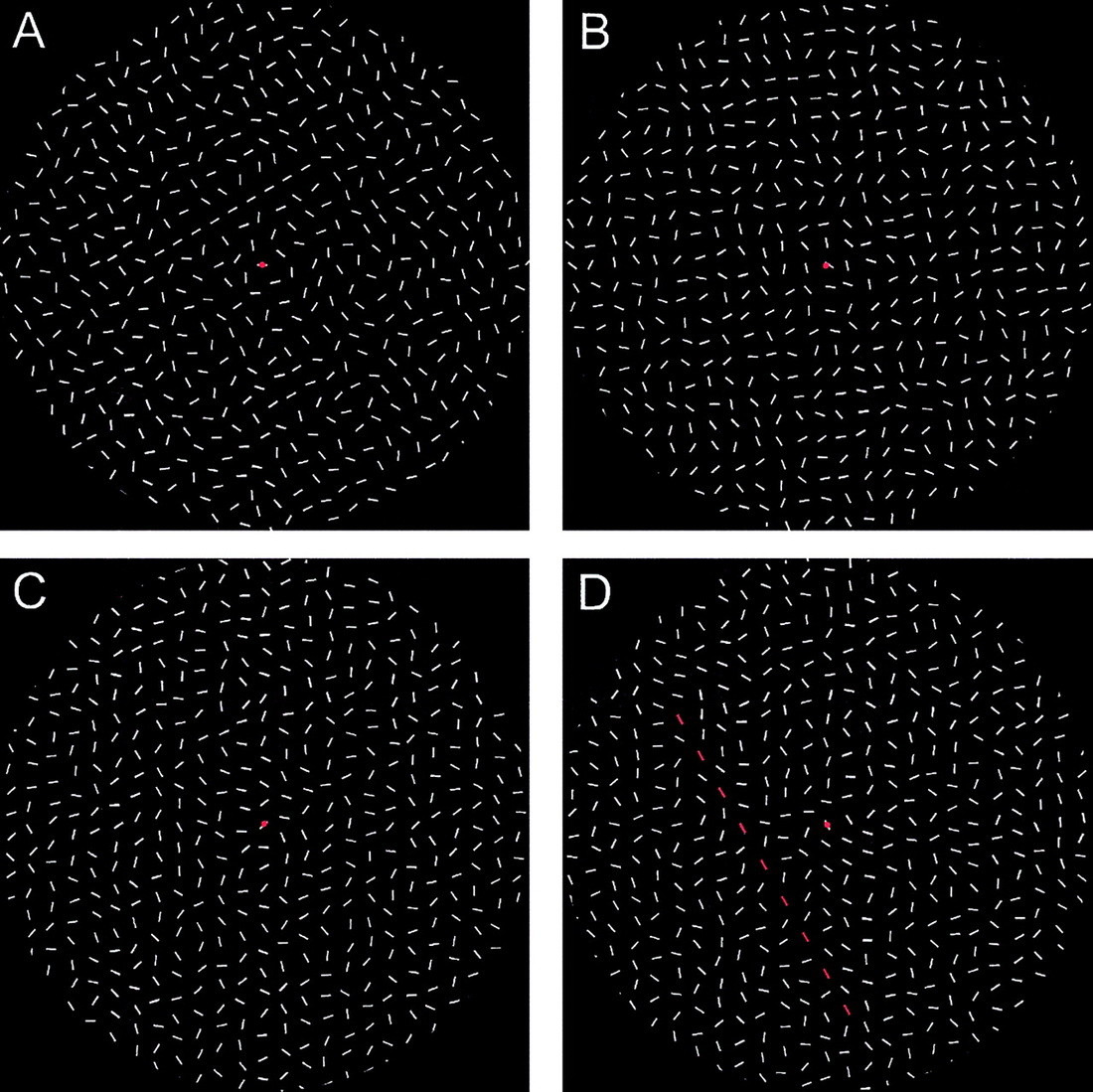
eye exercise, eye research, vision therapy, vision exercise, vision study, vision research, improve your vision, eye workout. see betterTry to identify the straight line in A, B, and C. C is tougher - D shows you where the line in C is.
The ability to improve one's vision with eye exercises remains a controversial area, with many eye care professionals continuing to argue that eye exercises provide no benefit. Researchers out of the University of California, Riverside (UCR) and Boston University, however, recently showed in a study published in the Journal of Vision that specific eye exercises can improve vision among those over 65.

The study showed that consistent practice of vision tasks that pushed the subject's visual limits, resulted in improved vision. "We found that just two days of training in one hour sessions with difficult stimuli resulted in older subjects seeing as well as younger college-age subjects," stated chief researcher G. John Andersen, professor of psychology at UCR. 

The task that the participants used to train their eyes, is essentially a pattern recognition exercise. Typically, this process involved the participants viewing a pattern which is then masked in such a way to make it difficult to see the pattern. Participants were instructed to focus on a central point in the image and identify the pattern using peripheral vision. Here is an example of masked images:


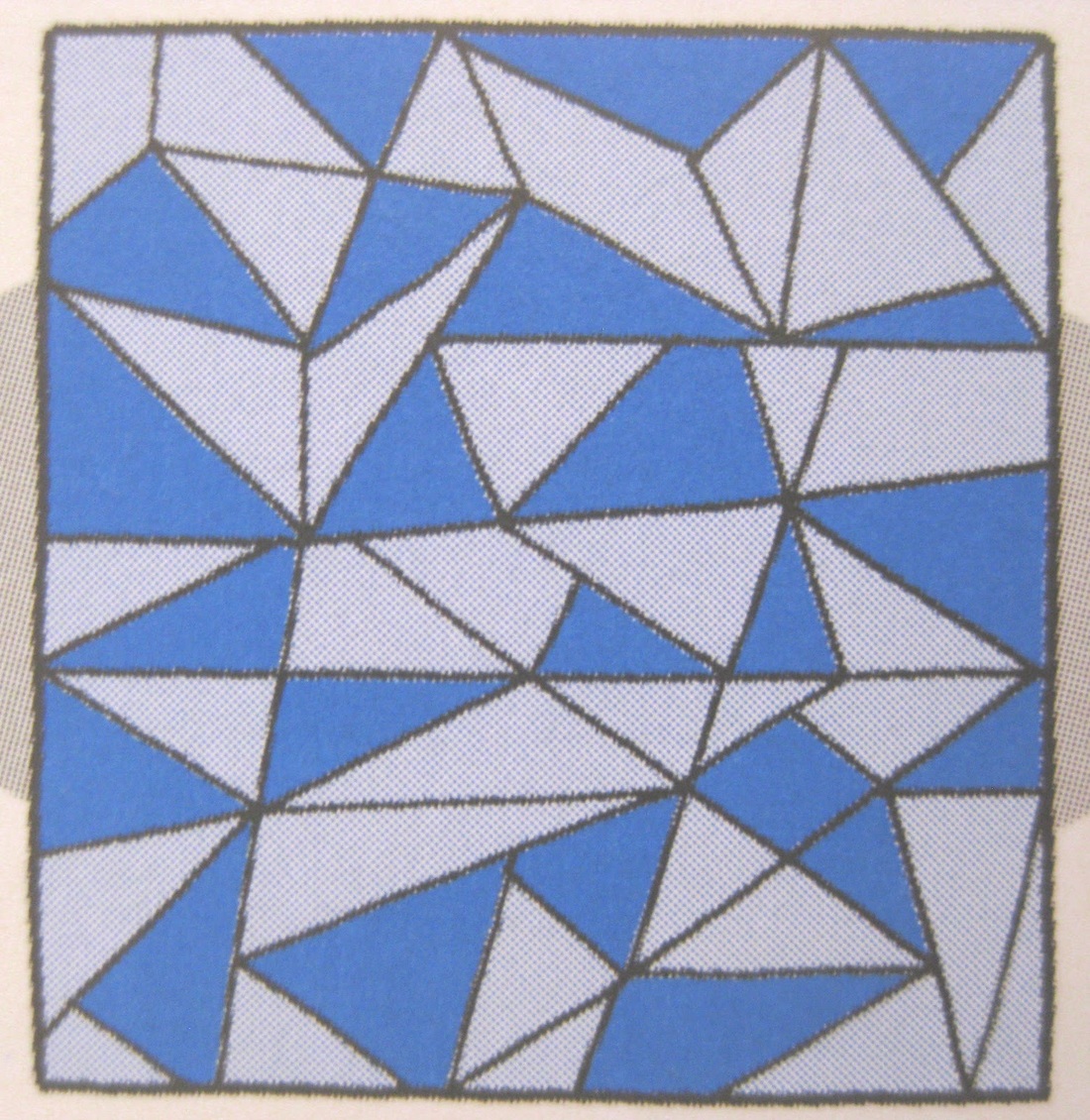
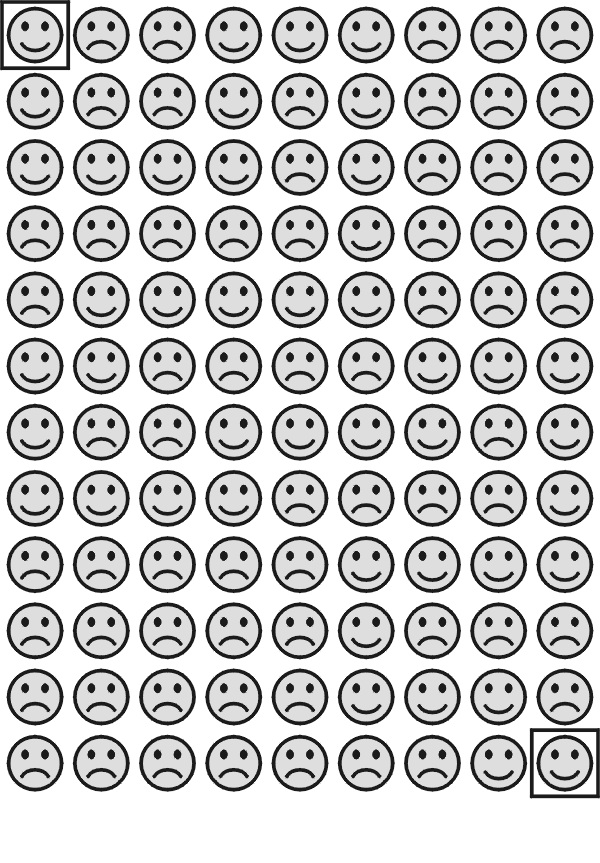
Without specialized equipment to create a series, it it's hard to duplicate the exercise on your own. However, you can help train your eyes, your brain, and their ability to work together by trying your hand at visual puzzles. Here are a couple of good examples: 

Picture
Find the hidden 5 point star
eye exercises, puzzles for vision
Follow the smiley faces through the maze
Here's another hidden star puzzle....

The visual puzzle concept is a nice compliment to the eye workouts available in The 15 Minute Fix: VISION. Any type of visual puzzle that requires you to send a wide variety of detailed information to your brain for interpretation and analysis will help train you to make better use of your eyes on a day to day basis. (Reading can provide similar benefits.)

If you want to try to create an exercise that you can work into your 15 Minute Fix eye workout, try this: Find a variable textured surface (wood, stone, brick, etc) and over the course of 3 minutes, try to identify 3 shapes or patterns. Sort of like looking for a shape in the clouds. If you are struggling to find any sort of shape or pattern, try creating letters or shapes by "connecting the dots" using imperfections in the surface. Also, be sure to use a different surface each time you do this exercise.
 
Age well my friends!
0 Comments

Chewing Gum: Brain Booster, Stress Reducer, Face Smoother, and Taste Enhancer

9/22/2014

0 Comments

 
gum, chewing gum, senses, sense of taste, face exercises, reduce stress, lower stress, cognitive function, improve cognitive function, brain boost, raise alertness, higher energy, face exercises, eye exercises, scalp exercises, mouth exercises, chewing exercise, quality of life
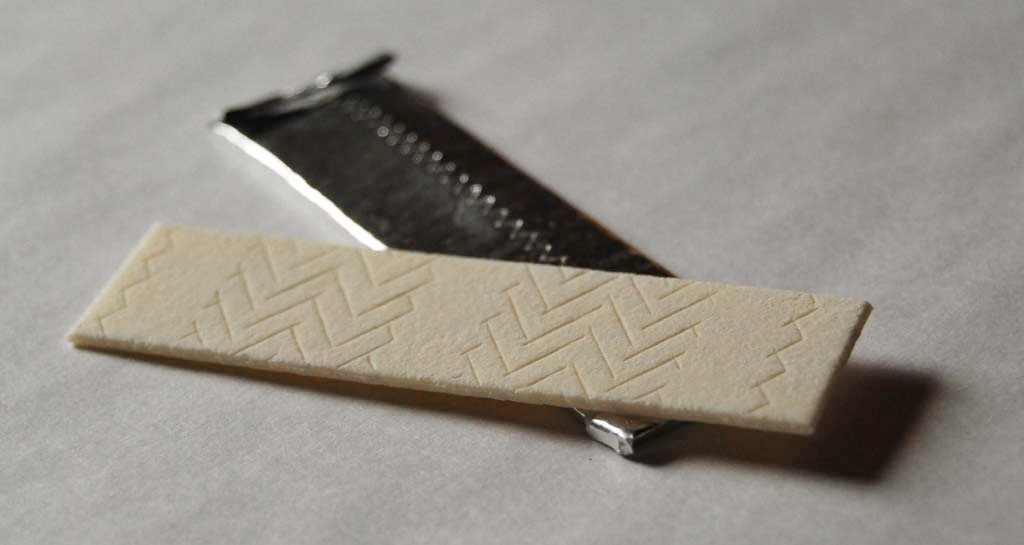
A number of recent studies have shown multiple benefits of chewing gum. Although gum chewing is not defined as a full exercise in any of The 15 Minute Fix books (though some do suggest chewing gum as a bonus activity), the mechanics and benefits are similar to those found in many of the exercises in SENSES (those targeting sense of taste) and FACE (those helping to support and firm chin and mouth areas).


A study out of the Department of Psychology at St. Lawrence University (New York, USA) showed that chewing gum results in a 15-20 minute boost in cognitive performance. The study found that this brain boost resulted from the act of chewing, not from the ingredients in the gum. This is consistent with the idea that performing a facial, sensory, or other 15 Minute Fix exercise can provide a quick mental recharge.

A study out of the School of Psychology at Cardiff University (UK) associated chewing gum with greater alertness, quicker reaction time, improved selective and sustained attention, and better mood. Gum flavor did not seem to affect outcomes, again supporting the idea that it is the chewing motion that provides these benefits.

A study by researchers from the Brain Sciences Institute at Swinburne University (Melbourne, Australia) found that chewing gum appeared to lower stress levels and improve alertness. Although they were not able to definitively identify the underlying mechanism of these effects, they stipulated that they may involve improved cerebral blood flow - a benefit of a majority of 15 Minute Fix exercises.

Because these and many other studies found that it was the act of chewing, rather than the gum that led to these benefits, the results support the idea that exercising different muscles in and attached to the head, can help improve cognitive function, reaction time, and alertness, along with lowering stress and improving mood. These are in addition to the benefit of helping your face look more youthful, improving your sense of taste (or smell or hearing), sharpening your eyesight, or reinvigorating your scalp.

So don't be shy about chewing gum (sugar free!) or starting one of The 15 Minute Fix programs. Besides helping your eyes, face, senses, or scalp, you will be taking definitive, manageable steps to improve your productivity, happiness, and general well being. 

Age well my friends!

0 Comments

Like Eye Exercises, Reading Is Good For You

9/16/2014

0 Comments

 
reading tips, how to read better, reading, eyes, vision, eye exercises, improve reading, better reading, read better, read books, books vs ebooks, do ebooks hurt eyes, are ebooks bad for eyes, slow reading
Today's Wall Street Journal has an interesting article about how 30 minutes of reading every day can lower stress and help your brain function better - just like eye exercises. It's not terribly surprising that eye exercises and reading provide many similar benefits. When done properly, both are relaxing and therapeutic while engaging and strengthening the brain.

The article has some great tips on how to read. Unlike the reading tips in The 15 Minute Fix: VISION, which are focused on supporting eyesight, the reading tips in the article are focused on maximizing comprehension and quality of your reading experience. The two sets of reading tips compliment each other well, so I encourage you to incorporate both sets into your reading routine. The tips in the article include:

  • Go to a place with no distractions. Switch off phone and computer.
  • Take occasional notes. It'll help you think about your reaction to the book.
  • Choose a printed book instead of an eBook. You'll see it lying around and it will remind you to read.
  • Dedicate at least 30 to 45 minutes to reading. Anything less won't allow you to immerse yourself in it.
  • Treat reading like exercise, as something you make time for.
Of course, the last one is my favorite. If you really want to get benefits beyond knowing what a book is about, you need to approach it as if it were exercise. This should not make reading any less enjoyable - read things you enjoy so that it never becomes a chore - but you do need planning, discipline, and commitment in order to maximize the benefits (if you have read any of The 15 Minute Fix books then you know that I believe these to be the cornerstones of a successful exercise program). 

Despite some overlapping benefits, eye exercises and reading have independent benefits that are both an important part of aging well. So I encourage you to read regularly, take good care of your eyes, and engage in an eye exercise routine. The 15 Minute Fix: VISION can help you with the care and the exercises, I'll let you take care of the reading....

Age well my friends!
0 Comments

No Quick Fix For Hair Loss

9/11/2014

0 Comments

 
For the most part, hair grows slowly. If you want to take steps to stop or slow your hair loss, you are going to need patience, discipline, and commitment. Whether you're applying Rogaine or practicing hair and scalp exercises from The 15 Minute Fix: SCALP, you need to do it every day for a long period of time before you will see results.

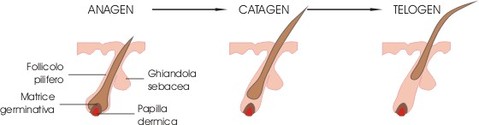
Understanding the hair growth cycle will help you appreciate the long term nature of any non-surgical approach to managing hair loss. WebMD has a good description of the hair growth cycle:
Hair on the scalp grows about .3 to .4 mm/day or about 6 inches per year. Unlike other mammals, human hair growth and shedding is random and not seasonal or cyclical. At any given time, a random number of hairs will be in one of three stages of growth and shedding: anagen, catagen, and telogen.

  • Anagen: Anagen is the active phase of the hair. The cells in the root of the hair are dividing rapidly. A new hair is formed and pushes the club hair (a hair that has stopped growing or is no longer in the anagen phase) up the follicle and eventually out. During this phase the hair grows about 1 cm every 28 days. Scalp hair stays in this active phase of growth for two to six years.

  • Catagen: The catagen phase is a transitional stage and about 3% of all hairs are in this phase at any time. This phase lasts for about two to three weeks. Growth stops and the outer root sheath shrinks and attaches to the root of the hair. This is the formation of what is known as a club hair.

  • Telogen: Telogen is the resting phase and usually accounts for 6% to 8% of all hairs. This phase lasts for about 100 days for hairs on the scalp and longer for hairs on the eyebrow, eyelash, arm, and leg. During this phase, the hair follicle is completely at rest and the club hair is completely formed. Pulling out a hair in this phase will reveal a solid, hard, dry, white material at the root. About 25 to 100 telogen hairs are shed normally each day.
hair loss, scalp exercises, scalp health, hair health, healthy hair, healthy scalp, regrow hair, exercises for aging, stop hair loss, look younger, alleviate stress, reduce stress, sharpen cognitive function, improve cognitive function, increase energy levels, improve quality of life, anti-aging exercises, anti-aging strategies, thinning hair, receding hairline, natural treatment for hair loss, natural hair loss treatment, male pattern baldness, female pattern baldness, baldness, androgenetic alopecia, alopecia, female hair loss, diffuse thinning, Tim Ferriss, 4-hour body, 4-hour workweek, tony horton, p90x, tom hagerty, Hugh Rushton, exercises for hair loss, exercises for the scalp
Given the random nature of the hair growth cycle, it is vital to keep your scalp healthy year round. Whether you are trying to stop hair loss with medicine, thinking about or living with hair restoration surgery, or simply want to maintain a healthy scalp, making a long term commitment to practicing the exercises in The 15 Minute Fix: SCALP every day will give you the best chance of maximizing your hair growth during the different phases of the hair growth cycle.

Age well my friends!


0 Comments

Hearing Loss May Lead To Depression

9/10/2014

0 Comments

 
Hearing loss, depression, hearing exercises, sensory exercises, exercises for depression, improve hearing, strengthen hearing, hear better, hearing, sense of hearing, hearing, 5 senses, five senses, improve my hearing, improve my sense of hearing, better senses, improve my senses, sensory perception
A recent study by a group of researchers from the National Institutes of Health found that progressive loss of hearing showed a clear correlation with increased risk of depression. The study also found that the risk of depression in those suffering from hearing loss was greater for those less than 70 years old and that women were at greater risk than men.

Although many hearing experts, psychiatrists, and caregivers have long believed that a diminished sense of hearing leads to depression, support of this concept has largely been anecdotal. This study adds scientifically sound data to the argument.  "It is not surprising to me that they would be more likely to be depressed," said James Firman, president and CEO of the National Council on Aging. "People with hearing loss, especially those who don't use hearing aids, find it more difficult to communicate with other people, whether in family situations, social gatherings or at work." 

The study supports the idea that the ability to hear well is not simply an end in and of itself. It is also an important means of improving your communication skills, boosting your social and professional confidence, and promoting overall mental and physical well-being. Of course readers of The 15 Minute Fix: SENSES know that I believe this to be case with all of the senses. Taking care of your senses of smell, taste, touch, and sight (covered in VISION) is a vital part of managing your overall health. A few minutes a day exercising your senses, along with a few common sense lifestyle adjustments (turn down the volume, etc.), will go a long way toward keeping your mind, body, and soul healthy for the long run.

Age well my friends,


0 Comments

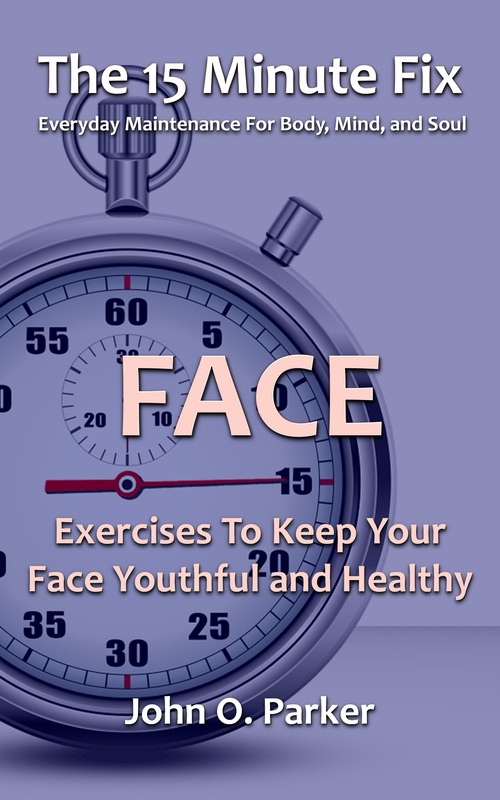
The 15 Minute Fix: FACE now in print!

9/8/2014

0 Comments

 
The print version of The 15 Minute Fix: FACE is now available. As with our other titles, FACE has been well received in eBook form, and now you have another way to learn about how to use facial workouts to tackle wrinkles, bags or dark circles under the eyes, double chins, turkey neck, jowls, sagging cheeks, laugh lines, and more.

The exercises in The 15 Minute Fix: FACE are designed to:

  • Teach you how to use face exercises to make your skin smoother, firmer, and healthier without the risk  and plastic look of invasive procedures
  • Help you develop a more youthful face without cutting into your busy schedule,
  • Target specific areas including neck, chin, lips, cheeks, nose, eyes, and forehead,
  • Relieve stress, sharpen cognitive function, improve communication skills, boost your confidence in both work and social situations, and improve your overall health.

Curious? Submit your email to download the 5 free exercises from The 15 Minute Fix: FACE:
Face exercises, facial exercises, face lift, natural face lift, younger looking face, erase wrinkles, exercises for aging, bags under eyes, turkey neck, double chin, wrinkles, look younger, alleviate stress, reduce stress, sharpen cognitive function, improve cognitive function, increase energy levels, improve quality of life, anti-aging exercises, anti-aging strategies, facial yoga, facial muscle exercises, facial muscle, look young, young looking skin, look younger naturally, exercises for the face, face workout, exercises for jowls, exercises for wrinkles, face yoga, cheek exercises, healthy skin, younger looking skin, dark circles under eyes, sagging cheeks, laugh lines, Tim Ferriss, 4-hour body, 4-hour workweek, tony horton, p90x, Sanford Bennett, Jack LaLanne, Senta Maria Runge, Doris Day, Gary Grove, Richard Fried, Robin Yuan
BUY NOW!
Submit
Age well my friends!
0 Comments

Do Your Facial Exercises, But Not Instead Of Using Sunscreen

9/2/2014

0 Comments

 
protect your face, sun block, sunscreen, Face exercises, facial exercises, face lift, natural face lift, younger looking face, erase wrinkles, exercises for aging, bags under eyes, turkey neck, double chin, wrinkles, look younger, alleviate stress, reduce stress, sharpen cognitive function, improve cognitive function, increase energy levels, improve quality of life, anti-aging exercises, anti-aging strategies, facial yoga, facial muscle exercises, facial muscle, look young, young looking skin, look younger naturally, exercises for the face, face workout, exercises for jowls, exercises for wrinkles, face yoga, cheek exercises, healthy skin, younger looking skin, dark circles under eyes, sagging cheeks, laugh lines, Tim Ferriss, 4-hour body, 4-hour workweek, tony horton, p90x, Sanford Bennett, Jack LaLanne, Senta Maria Runge, Doris Day, Gary Grove, Richard Fried, Robin Yuan
Exercising your face is is a great way to help make your skin smoother, firmer and healthier. But as readers of The 15 Minute Fix: FACE know, I also believe it is important to take care of yourself and your skin in order to fully benefit from the exercises. This of course includes protecting your skin from sun damage.

The Annals of Internal Medicine, the American College of Physicians' internal medicine journal, published a study last year showing that participants who were instructed to use sun-protection factor 15+ sunscreen every day (reapplying after sweating, swimming, or spending a few hours in the sun) showed 24% less skin aging than a control group.

Use sunscreen if you spend any significant part of your day outside - which you should do if you can! If you're doing facial exercises but not taking care of your skin and overall health, you're not going to get the results you're looking for. It doesn't make sense to go have a smoke and a doughnut after doing yoga. Same thing here.

In addition to the face exercise program in The 15 Minute Fix: FACE, you'll find tons of other tips on how to take care of your face by improving your nutrition, changing the personal care products you use, and making smart decisions about your overall health. I hope you'll take a look....

Age well my friends!

0 Comments

    YOUR HOST

    John wants to get the most out of life and wants to help you do that too!


    eye exercises, improve vision, see better, exercise my eyes, exercise eyes, vision exercises, see more clearly,
    sensory exercises, improve my senses, better senses, improve my sense of, smell, taste, touch, hearing
    face exercises, smoother face, facial exercises, get rid of my double chin, shrink jowls, bags under eyes, stress lines, laugh lines
    exercises for hair loss, scalp exercises, hair exercises, hair loss exercises, exercises to stop baldness, exercises to stop hair loss, exercises to stop losing hair
    See my Author Page at Amazon!

    Categories

    All
    Eye Exercises
    Facial Exercises
    Hair & Scalp Exercise
    Sensory Exercises
    Series


    Archives

    January 2015
    December 2014
    November 2014
    October 2014
    September 2014
    August 2014
    July 2014


    Follow John on Quora
The 15 Minute Fix offers exercise programs to combat  aging, reduce stress, improve cognitive function, and promote a youthful mind, body, and soul. The series follows the tradition of innovators such as Tim Ferriss's 4-Hour Body and Tony Horton's P90X series.
 Copyright © 2014-2015. All rights reserved.